Abdi Mohamed Elmi
Black Hawk DownAbdi Mohamed Elmi is a surgeon at Mogadishu’s Volunteer Hospital whose brief pause amid the battle’s mounting casualties exposes both the scale of the medical emergency and the limits of individual endurance. After assisting in 18 major operations through the night, he sits down at 8 a.m. while wounded people fill the hospital; challenged for not helping, he answers that he cannot, then finishes his cigarette and goes back to work. The pause does not end his labor: he will remain awake for another 24 hours.
Identity and Setting
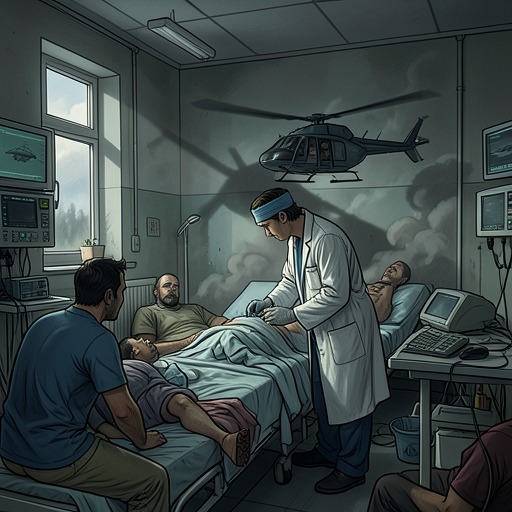
Elmi appears in the account through his work as a surgeon at Volunteer Hospital, near the American base by the airport. The book gives no further biographical history; instead, it places him inside a hospital transformed by the fighting. Before the trouble began, Volunteer was almost empty. As the battle developed, the hospital’s location did not make it a reassuring destination for residents: many were afraid to come there after the Americans became involved in the fighting.
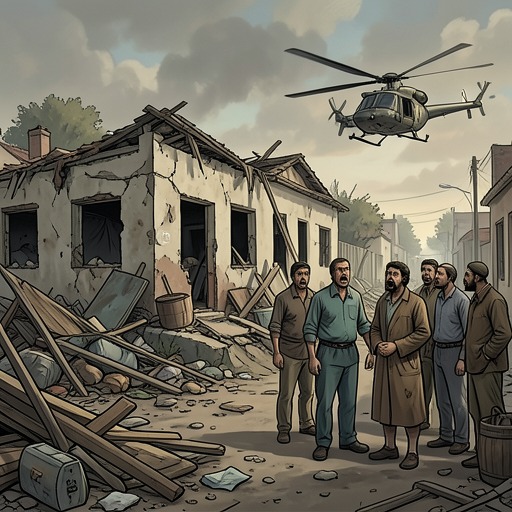
The first wounded people arrived early in the evening, but initially only in a trickle, despite the volume of gunfire. Burning roadblocks cut across the city, American helicopters flew low and fired, and many people were afraid to venture out. The limited early flow therefore did not reflect the eventual number of casualties. It marked a delay between injury and treatment, a delay that would prove consequential for patients with gut wounds: many would die, and infections could take hold before patients reached care.
A Hospital Overrun
Volunteer’s operating capacity was starkly limited. Its theater had three beds, and Elmi worked as one of seven surgeons who continued through the night without a break. By sunrise he had assisted in 18 major surgeries. Outside the operating room, the hallways were filling rapidly, with more wounded arriving in dozens and then hundreds. The pressure was not simply a matter of a crowded ward: the rising number of casualties met finite beds, a small surgical team, and the consequences of delayed treatment.
By the end of October 4, all 500 beds at Volunteer would be occupied, with at least 200 additional wounded lying in the hallways. The hospital was not the largest in Mogadishu; the numbers at Digfer Hospital were even greater. The book also emphasizes the limits on treatment after patients arrived. For those with gut wounds, time lost before reaching the hospital allowed infections to set in, while the hospital had only the antibiotics it could spare. Elmi’s work took place inside an emergency whose scale exceeded the available space, personnel, and supplies.
The Pause at 8 A.M.
After working straight through the night, Elmi finally walked out of the operating room at 8 a.m. He was covered in blood and exhausted. The hospital around him remained in motion: doctors and nurses hurried through the hallways as injured people screamed, moaned, bled, and waited. Elmi sat quietly on a bench and smoked a cigarette. The scene sets one exhausted surgeon’s brief stillness against the suffering continuing beyond the operating room.
A French relief worker saw him sitting and angrily demanded, "Why don't you help these people?" Elmi answered, "I can't." The exchange records a confrontation, but does not explain the worker’s assumptions or supply Elmi’s private thoughts. In the circumstances the passage has established, his answer comes after a night without a break and 18 major surgeries; it is a statement made at the point where the narrative shows his exhaustion, not evidence that he has abandoned his work.
Return to Work and Narrative Role
The relief worker stormed away. Elmi remained seated until he had finished his cigarette, then stood and went back to work. He would not sleep for another 24 hours. That sequence gives the pause its full significance: the scene neither turns his exhaustion into a simple refusal nor presents medical labor as limitless. He stops briefly, is judged for stopping, and resumes the work while the hospital’s needs continue to exceed what its staff can immediately provide.
Elmi’s episode also gives the battle a civilian medical consequence distinct from the fighting in the streets. The account moves from the fear that kept people away, to casualties accumulating in the wards, to the surgeon’s exhausted return to the operating work. His experience makes the delay, crowding, and scarcity concrete without suggesting that one doctor could contain them. The cigarette and the short exchange become the visible measure of a pause inside an emergency that does not pause with him.